
God Tests Positive for STIs
STI cases hit a decade high in Europe. Shame is a public health crisis.

Shame is a public health crisis.
STI cases hit decade high across Europe and the European Centre for Disease Prevention and Control (ECDC) named the mechanism plainly: widening gaps in testing, out-of-pocket costs for basic STI screening in 13 of 29 countries, changing sexual habits met with unchanged institutional silence.
The Church required confession of sexual sin to a priest before you could receive the sacraments. What we’ve inherited is that same architecture without the absolution. People struggle to name, submit, and ask for a cure. Out-of-pocket costs for STI tests function like a shame tax, a penalty that makes asking for help feel like moral failure.
We can call it an access problem, a stigma problem, an education problem, and it is all of these but the conflation of the body with guilt has a doctrinal history which produces secular responses that harmonize well with the dominant Christian framework: STIs are consequences of disobedience, and evidence that sex outside sanctioned boundaries produces suffering.
Are you bored? I am bored. This dead end yields fewer bodies near your body and a whole lot of shame. I learn nothing about God here, only our inability to differentiate between love and control.
I’d like to explore something different entirely:
The same biological permeability that makes sex possible makes infection possible. If God actually entered a body with a microbiome, and mucous membranes, then the God who created STIs also created the body that is porous and vulnerable. My question is: what kind of God created bodies that need each other badly enough to risk infection to have them?
This is a God that knows longing.
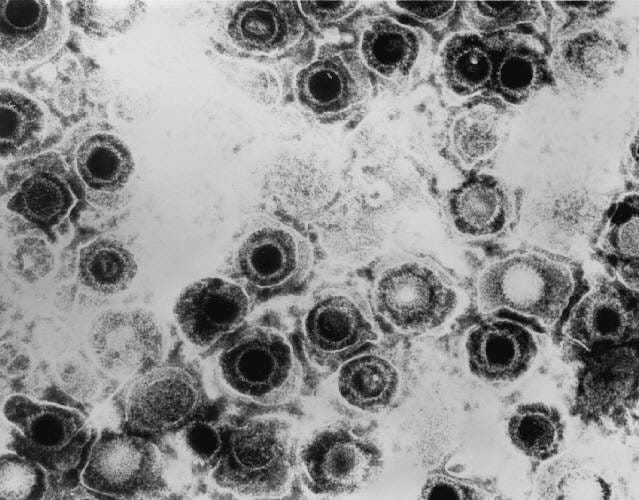
HSV-2 degrades rapidly outside the body. It requires direct mucosal contact: it cannot persist on surfaces, travel through air, but exists only in the conditions of warmth, moisture—the specific chemistry of bodies in touch with bodies. You may say it is among the most anxiously attached pathogen—such that isolation kills it. If you wanted to design an organism that testified to the necessity of touch, this is it. And once it crosses the distance between bodies, it stays: lodges in the dorsal root ganglia, becomes part of the nervous system itself in its yearning for how you sense. The body that has known HSV-2 is changed by contact on a cellular level. The biology of herpes is the biology of intimacy itself, ensuring that we do not return from the encounter unchanged.
The body does not conflate exposure and encounter with guilt, shame, or moral adjudication. The body responds, learns, and integrates. The body teaches me something that I will spend the rest of my life learning: proximity is survivable (!), encounter does not always mean devastation (!), and the Self is robust enough to meet the other without being destroyed. What makes us vulnerable to STIs is what makes transcendence possible.
There is risk in the rapture.
Trying to engineer the risk away produced 140 infants born with congenital syphilis in 2024—not because anyone was punished, but because shame-structured systems don’t screen, don’t treat, don’t reach people in time. That’s not God’s judgment. That’s ours.
I’m interested in the God that I can find in the STI, present in the risk, discovered through touch.
If you want to join me in a systematic reimagining of God through the body we actually have, God and Sex opens for enrollment on June 8. We will read herpes, HPV, syphilis, chlamydia, gonorrhea, and HIV as theological texts. Come prepared to be surprised by what they say.